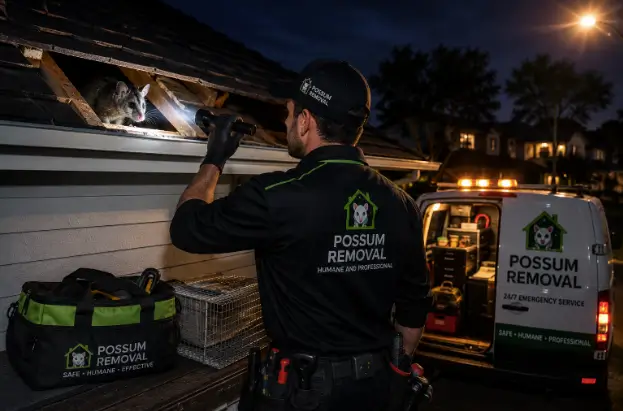
Finding a possum inside a roof, ceiling cavity, garage, or another enclosed part of a home can quickly become stressful. Many homeowners first become aware of the problem after hearing scratching, thumping, or movement during the night. Because possums are generally active after dark, the noise can become particularly noticeable when the rest of the house is quiet. In some cases, the animal may simply be using the roof as shelter, while in others it may become trapped or enter an area where immediate attention is required. Emergency possum removal can help homeowners respond appropriately while protecting both the property and the animal.
Possums are native Australian wildlife, which means dealing with them is different from handling common household pests. Homeowners should understand possum removal laws before attempting to trap, catch, relocate, or physically handle an animal. A responsible approach considers how the possum entered the property, whether it can leave safely, and what changes may be required to prevent another animal from using the same space.
Effective possum management should not focus only on removing the immediate disturbance. The condition of the roof, possible entry points, surrounding vegetation, and future prevention are equally important. By addressing the complete situation, homeowners can create a longer-lasting solution rather than dealing with the same problem repeatedly.
When Emergency Possum Removal May Be Necessary
Seeing a possum outside does not normally require urgent action. Possums naturally move through gardens, trees, fences, and residential areas after sunset. They are part of the surrounding environment and can usually coexist with people without creating problems. The situation changes when an animal enters a building and begins using an enclosed area as shelter.
A possum inside a roof can create considerable nighttime disturbance. Scratching and movement may occur directly above bedrooms, making it difficult for residents to sleep. Some homeowners may also hear heavier thumping as the animal travels from one section of the roof cavity to another.
Emergency possum removal may become particularly important when an animal appears trapped or has entered a living area, garage, or another location where it cannot easily return outside. A frightened possum may become stressed if people or pets approach it, so trying to corner or physically grab the animal is not a sensible response.
The first priority should be understanding the situation. Homeowners should determine where the activity is occurring and avoid taking actions that could make the problem worse. Closing an opening without knowing whether the animal is still inside, for example, could trap the possum within the building.
Correct identification is also essential. Rats, mice, birds, and other animals can produce noises inside ceilings. Assuming that every nighttime sound is a possum can lead to inappropriate action. A careful assessment helps determine what is actually present before deciding how the problem should be managed.
Understanding Possum Removal Laws
Possums are native wildlife, so their management requires more consideration than simply treating them as unwanted household pests. Possum removal laws are designed to ensure that these animals are managed responsibly and without unnecessary harm.
For homeowners, this means trapping a possum and taking it to a distant location should not be considered a simple DIY solution. Possums establish themselves within familiar areas where they know how to find shelter, food, and suitable places to move. Removing an animal from its established environment can create significant difficulties for it.
The legal requirements surrounding possum management can also vary according to the type of action being taken. This is why homeowners should avoid making assumptions about what they are allowed to do simply because the animal is inside their property.
A responsible approach focuses on removing the possum from the building while keeping wildlife welfare in mind. Where specialised handling or trapping is necessary, professional assistance can help ensure the situation is managed appropriately.
Understanding possum removal laws also helps homeowners recognise why prevention is such an important part of the process. If an animal can be encouraged or appropriately removed from a roof and the entry point is then secured, the conflict can often be resolved without trying to remove possums from the surrounding neighbourhood.
The objective is to establish a clear boundary. The house should remain protected as a human living space, while possums can continue living in suitable outdoor habitat.
Why Professional Possum Removal Can Be Important
Possum problems can appear simple at first. A homeowner may hear an animal in the roof and assume that getting it outside will solve everything. In reality, several factors need to be considered before the problem can be properly addressed.
The first is identification. Knowing whether a possum is actually present prevents time being wasted on unsuitable methods. The second is locating the access point. A possum cannot continue living in a roof unless there is some way for it to enter and leave.
Professional Emergency possum removal can focus on these factors before any exclusion work begins. The property can be assessed for signs of wildlife activity and possible entry routes. This provides a clearer understanding of why the problem developed.
Timing is particularly important. Possums often use roof spaces as daytime shelter and become active after dark. If a homeowner notices a gap during the day and immediately seals it, there is a possibility that the animal is still resting inside.
There may also be more than one possible opening. Closing one gap while leaving another accessible may do little to prevent future activity.
Professional management should therefore consider removal and property protection together. Once the animal is no longer occupying the roof, vulnerable areas can be addressed to reduce the chance of another possum moving into the same space.
This approach is more practical than repeatedly responding to nighttime disturbances without dealing with their underlying cause.
Preventing Possums From Returning to the Property
Prevention is one of the most important parts of long-term possum management. Removing the current animal may provide immediate relief, but an accessible roof can remain attractive to wildlife.
Homeowners should consider how possums are reaching the building. These animals are excellent climbers and can use trees, fences, garages, sheds, pergolas, and other structures to reach roofs. Once there, gaps around eaves, roofing materials, vents, or other exterior features may provide access.
Roof maintenance can therefore make a significant difference. Damaged materials, loose sections, and visible openings should be addressed once it is confirmed that no animal remains inside.
Vegetation can also influence access. Trees are valuable parts of residential environments and provide habitat for native wildlife, so removing them unnecessarily is not the objective. Instead, homeowners can consider whether particular branches create direct routes toward vulnerable roof sections.
Food sources around the property should also be managed sensibly. Pet food left outdoors overnight, unsecured rubbish, and fallen fruit can encourage wildlife to spend more time close to the home. Reducing these attractions can help discourage repeated activity immediately around the building.
Regular maintenance provides another layer of protection. Weather, ageing materials, and renovations can create new gaps over time. Homeowners who have previously required Emergency possum removal may benefit from periodically checking areas where activity occurred before.
A property that remains well maintained is less likely to provide convenient shelter, even when possums continue living throughout the surrounding neighbourhood.
See also: Why Every Business Needs a Reliable Commercial Emergency Plumber
Balancing Humane Management With Property Protection
Possums usually enter buildings because they have found shelter, not because they are deliberately trying to damage a home. Roof cavities can provide darkness, protection from weather, and a quiet place to rest during daylight hours. Understanding this behaviour helps homeowners respond more effectively.
Humane management focuses on making the building unavailable while allowing the possum to remain part of the local environment. This is one reason understanding possum removal laws is valuable. The goal should be responsible management rather than unnecessary harm or inappropriate relocation.
In some situations, providing alternative outdoor shelter may support this approach. A suitable possum nesting box placed in an appropriate tree can provide another protected location, particularly where natural tree hollows are limited.
Alternative shelter should work together with exclusion. If the roof remains easily accessible, providing a nesting box alone may not change the animal’s behaviour. The building must also be protected so that the roof is no longer the easiest shelter option.
Homeowners can therefore think about possum management as creating a better boundary between residential living and wildlife habitat. Gardens and trees can continue supporting native animals while roof cavities and internal areas remain protected.
This approach provides a more sustainable solution than attempting to remove every possum that visits the property. Wildlife will continue to move through residential areas, but a properly protected building can significantly reduce the chance of unwanted occupation.
Creating a Safer and Quieter Home for the Future
An unexpected possum problem can be frustrating, especially when nighttime activity repeatedly interrupts sleep. Emergency possum removal can help address urgent situations, but the best results come from looking beyond the immediate disturbance.
Correct identification should come first. Once it is established that a possum is responsible, attention can turn to how the animal is entering the property and whether the building contains additional vulnerable areas.
Homeowners should also keep possum removal laws in mind before attempting trapping or relocation themselves. Possums are native animals, and responsible management should respect the rules and welfare considerations associated with handling wildlife.
After the immediate problem has been addressed, prevention becomes the priority. Securing appropriate roof openings, maintaining exterior materials, managing direct access routes, and reducing unnecessary food attractions can help prevent another animal from establishing itself inside.
Regular observation is equally useful. Roofs and surrounding vegetation change over time, so a property that is secure today may develop another vulnerable area in the future. Addressing small maintenance problems early can reduce the likelihood of another urgent situation.
The objective of Emergency possum removal is not simply to stop the noise for one night. A more complete approach helps homeowners restore a quiet and secure living environment while allowing possums to remain safely outdoors.
By combining responsible management, an understanding of possum removal laws, and practical property prevention, homeowners can reduce recurring problems and create a healthier balance between their homes and the native wildlife living around them.